A chassis can look tough, but it hides a lot of trouble. Mud, salt, oil and old coatings sit on the metal and quietly keep moisture close to it. That is why chassis restoration cleaning matters so much. It is the stage that decides whether any new protection sticks, seals and lasts, or fails after a couple of winters.
Why chassis restoration cleaning comes first
Rust protection works by forming a barrier on bare, clean metal. If dirt, grease or loose rust sits underneath, the coating bonds to the mess instead of the steel. Moisture then slips in behind it, and the rust carries on, hidden from view. We see this as the biggest reason good products let people down.
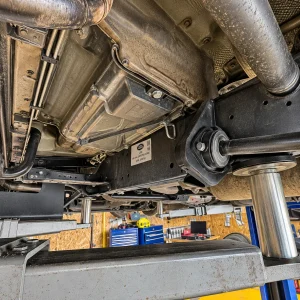
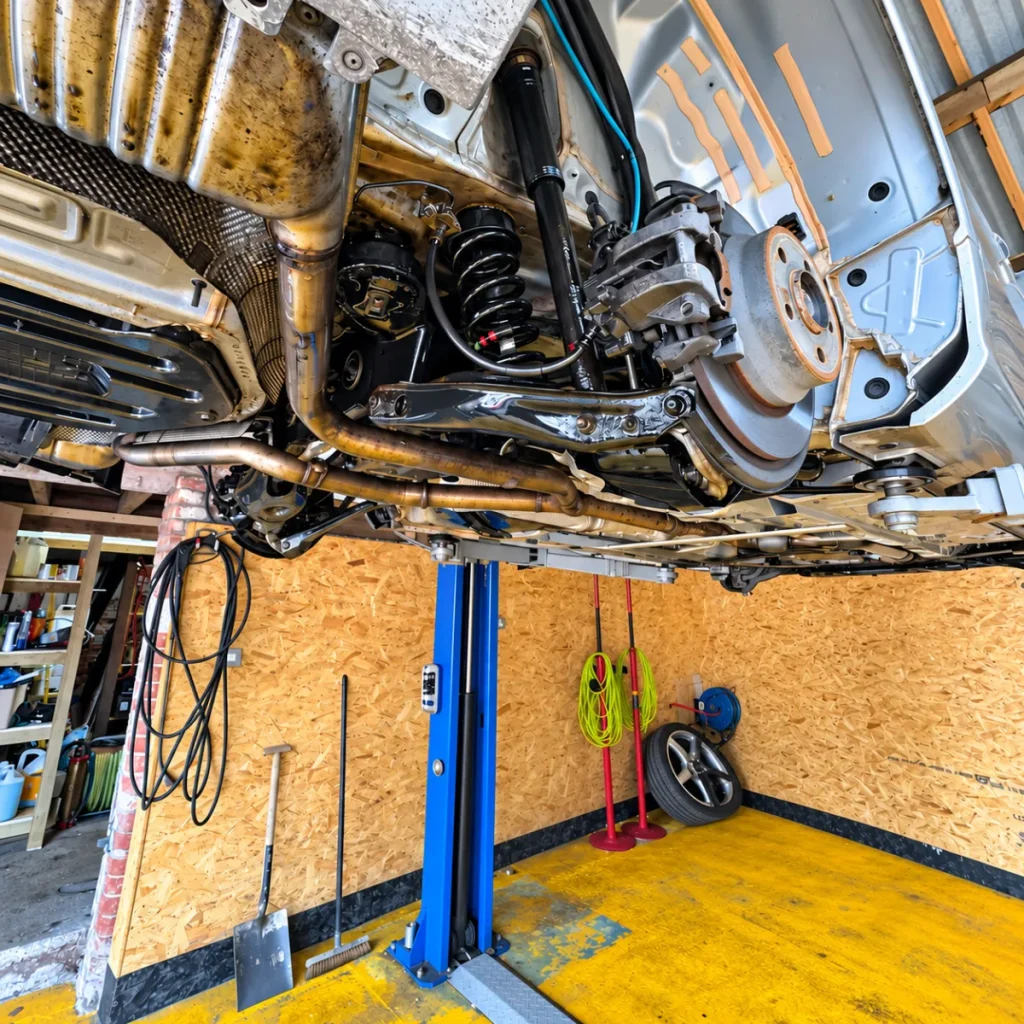
Cleaning also lets us see what we are dealing with. Under a layer of grime, a chassis rail might be perfectly sound, or it might be thin and flaky. A proper clean shows up weak spots, seized fixings and damaged brackets before anything gets sealed in.
It matters for moving parts too. Our guide to how Lanoguard protects suspension and chassis components shows why those parts need the same care as the main frame. Clean metal is the starting point for all of it.
Underbody rust removal: the process we follow
Every vehicle is different, but good underbody rust removal always follows the same order. Here is how we work at Guardian Shield, in plain steps.
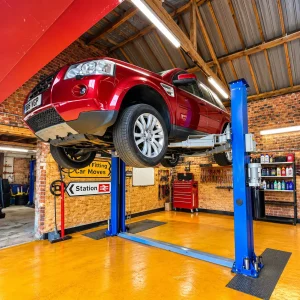
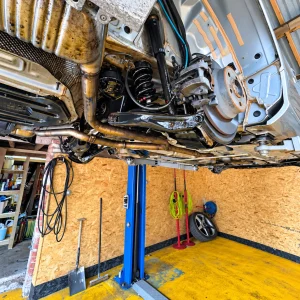
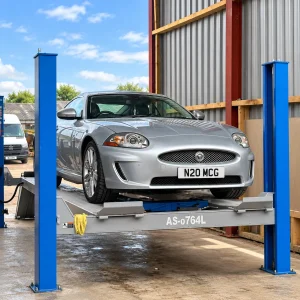
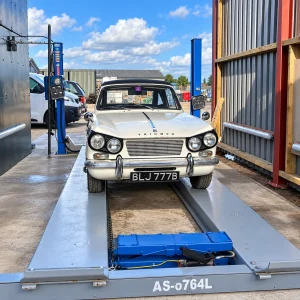
- Safe support and inspection. The vehicle goes on a lift or axle stands, never on a jack alone. We look over the whole underside and make a note of rust, leaks and damage.
- Degreasing and washing. A strong degreaser and a pressure washer lift off oil, road film and salt. These are the things that stop coatings from gripping.
- Drying. The metal must be completely dry. Trapped water is the enemy, so we never rush this part.
- Removing loose scale and old coatings. Depending on the condition, we use scrapers, wire wheels, sanding or blasting. Blasting reaches into corners and seams that hand tools simply cannot.
- Treating leftover rust. Pitted areas where a little rust remains are treated with a rust converter, so what is left becomes stable.
- Final clean. We blow away all dust and metal particles, then wipe the surface with a grease remover so no fingerprints or residue remain.
Safety matters as much as the results. If you ever do light cleaning at home, wear eye protection, a mask and heavy gloves, and work somewhere with plenty of fresh air when using chemicals.
Once the metal is clean, dry and sound, a Lanoguard treatment can go on and do its job properly. It has a clean surface to cling to, so it can cover the metal and work its way into tight areas.
Chassis restoration cleaning mistakes to avoid
Most failures come down to a few simple slips. They are easy to make, especially when you are keen to get the protection on and finish the job.
- Rushing the drying time. Damp metal sealed under a coating becomes a perfect place for new rust to start.
- Leaving scale behind. Flaky rust under a coating keeps moving and lifting, and the protection goes with it.
- Skipping the final wipe down. Oil, dust and cleaning residue all weaken the bond between metal and coating.
- Missing awkward areas. Corners, seams and the insides of box sections are where rust likes to hide.
Sometimes cleaning shows damage that cleaning alone cannot fix, such as holes or weakened mounting points. In that case, the necessary car repairs should come first, because protection should never be used to cover up a problem.
The choice of protection afterwards matters too. We explain in detail why underbody rust protection lasts longer when it is applied over properly prepared metal. Good prep and good products work as a team.
FAQs
How long does it take to clean a chassis properly?
It depends on how dirty and rusty the underside is. A lightly soiled chassis is much quicker than one covered in thick scale and old coatings. Drying time is part of the job too, so it is never a case of cleaning in a few minutes. After we have inspected your vehicle, we can give you a clearer idea.
Can I clean my chassis myself?
You can handle light cleaning at home, as long as you support the vehicle safely and wear the right protective gear. Heavy rust, thick old coatings and hard-to-reach areas are a different story. Professional tools and a good working space make it far easier to reach bare, clean metal everywhere.
Do I need to remove all the rust before applying protection?
You need to remove all loose and flaky rust, because that is what stops coatings from holding. Small areas of stable, treated rust can be dealt with using a rust converter. If you are unsure what condition yours is in, get in touch, and we will point you in the right direction.
Give Your Chassis a Clean Start and Lasting Protection
Chassis restoration cleaning is the foundation of every lasting rust protection job. Degrease, dry, remove scale, treat what is left and finish with a clean wipe, then protect. Skip any step, and moisture will find its way back in. Do them well, and your chassis has the best chance of staying solid for years.
Ready to give your vehicle the right start? Book your vehicle in with Guardian Shield today, and we will take care of the cleaning, preparation, and protection, one careful step at a time.