If you have been typing Lanoguard near me into a search bar, you are probably tired of worrying about rust creeping along the bottom of your car. We get it. The underside takes a beating from rain, road salt and grit, and most of the damage is hidden from view. In this guide, we explain what a proper Lanoguard treatment involves, how long it takes, and how to pick a good installer close to home.
Why people search for lanoguard near me
Lanoguard is a clear protective coating made from lanolin, a natural wax found in sheep’s wool. It is sprayed onto the underside of a vehicle to keep water and oxygen away from the metal. Without those two things, rust has a much harder time spreading.
Many drivers choose it because it is very different from old-style black underseal. Black underseal can dry out, crack and trap moisture underneath, so rust can hide where you cannot see it. Lanoguard stays soft and flexible. It moves with the vehicle, and it can creep into small scratches and stone chips. That is why people with daily drivers, classic cars, vans and off-road vehicles all look for it.
If you want to know why it holds up so well, this article on why Lanoguard underbody rust protection lasts longer goes into more detail. The short version is simple. A coating that keeps working over time beats one that just sits on the surface.
Another big plus is that the coating is clear. It does not hide the metal, so you or an MOT tester can still check the condition of the chassis. Nothing is covered up, and you can see what is going on underneath.
What happens during a Lanoguard treatment
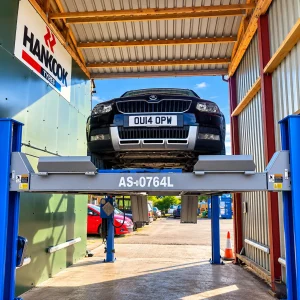
A good treatment is all about preparation. The coating can only bond well to a surface that is clean and dry, so the first steps matter just as much as the spraying. Here is what a thorough job usually looks like:
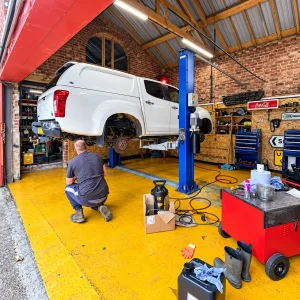
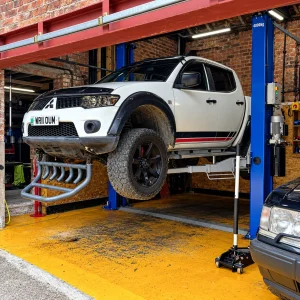
- The vehicle is raised so the installer can reach every part of the underside.
- The wheel arches and underbody are jet washed to remove mud, salt and loose dirt.
- Everything is dried completely, often with warm air.
- Arch liners and undertrays may be taken off so the metal behind them can be cleaned and treated too.
- A thicker Lanoguard grease is placed on weld seams, nuts, bolts and other high-risk spots.
- The clear spray is applied across the arches and underside, and then left to dry.
Some installers also inject the product into box sections and sills, where moisture likes to collect. These are places you cannot reach with a simple spray, yet they are often where rust starts first.
Drying time is the reason a proper job is not a quick one. Expect your vehicle to be away for a couple of days rather than a couple of hours. If someone offers to finish the whole thing in a short visit, it is worth asking what has been skipped.
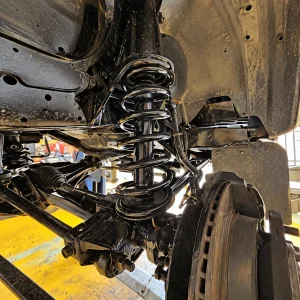
Parts that move and flex need care as well. To see how the product looks after these areas, read how Lanoguard protects suspension and chassis components. Rubber boots, brake lines and suspension parts all sit in the firing line of spray from the road.
Lanoguard rust protection: what to ask before you book
Not every installer works in the same way, so a few questions will save you trouble later. Think of it as a short checklist you can take with you when you call around.
- Do you remove the arch liners? Leaving them in place means dirt and moisture stay trapped behind them.
- How do you clean the underside first? A rushed wash leads to poor bonding.
- Do you treat seams, bolts and cavities one by one? These are the weak spots on most vehicles.
- How long will you keep my vehicle? A longer stay usually means proper drying and curing.
- Will you photograph the work? A before-and-after record is handy proof.
Price is the other big question. Costs depend on the size, age and condition of the vehicle, and on whether extra trim has to come off. We will not guess at a number here, because a fair quote always comes after someone has looked at your vehicle. Ask for a clear price that lists exactly what is included.
Also be realistic about what the product can do. Lanoguard is not a magic cure for heavy rust, and it is not meant to make the underside look shiny. It is there to slow down and stop corrosion. Our guide on choosing Lanoguard rust protection for peace of mind explains how it fits into long-term ownership.
Finally, plan for a yearly top-up. The coating thins slowly where it gets the most wear, such as behind the wheels. A yearly check and top-up keeps the barrier strong, and it usually costs less than the first full treatment. Cars that are only used in summer may need attention less often, but an annual look is still wise.
Choosing the right lanoguard near me installer
Searching online will give you a list of names, but the closest one is not always the best one. Look for reviews that mention underbody work, ask to see photos of past jobs, and check that the vehicle will be kept somewhere safe and insured while it is being treated. A tidy, dedicated workshop is a very good sign.
Distance matters less than you might think, because you only need to drop your vehicle off twice a year at most. If you live in the north west, you can read about Lanoguard Cheshire for underbody rust protection to see what a local service looks like in practice.
At Guardian Shield, we believe the best choice is the installer who explains things clearly and does not rush. If they answer your questions without fuss and are happy to show you their process, you are in good hands.
FAQs
Can Lanoguard be put on an older vehicle?
Yes. Older vehicles often benefit the most, because their factory protection has worn away over the years. If there is already heavy rust, it should be dealt with first. Surface rust and light corrosion can usually be treated, but the installer should check it before they start.
Is Lanoguard the same as black underseal?
No. Black underseal is a thick, dark coating that can crack and hide problems. Lanoguard is clear and flexible, so you can still see the metal underneath. It is a protective treatment, not a cosmetic one.
Is Lanoguard safe for rubber and suspension parts?
It is designed to be gentle on rubber boots, seals and suspension parts. It is not meant for very hot areas, so the exhaust system is normally left untreated. Mention any special parts, such as air suspension, when you book so the installer can plan around them.
Keep Your Vehicle Protected with the Right Lanoguard Treatment
Finding the right lanoguard near me comes down to preparation, patience and honest answers. A good installer cleans thoroughly, treats every seam and cavity, allows proper drying time and plans a yearly top-up. Do that, and your car, van or 4×4 has a much better chance of staying solid for years.
Ready to take the next step? Talk to Guardian Shield today, tell us about your vehicle, and we will help you work out the best way to protect it from rust before the next wet winter arrives.