Winsford grew rapidly from the 1960s onward as an overspill town, and that growth shaped a place where a large share of residents commute out daily via the A556 and onward to the M6, heading towards Chester, Warrington, and Manchester for work. That kind of daily mileage, built up year after year, puts a different kind of strain on a vehicle’s underbody than the shorter trips typical of a smaller, more self-contained town. More miles means more exposure to road salt, standing water, and general road grime, which is exactly why rust protection Winsford commuters invest in tends to matter more here than in towns where most driving stays local.
The town’s estates and housing developments, many built during that same period of rapid growth, mean a large proportion of vehicles here are used for exactly this kind of daily commuting pattern rather than the more occasional use typical of a rural or more established town centre. That’s a very different wear profile for a vehicle to deal with over its lifetime, and it’s one that a proper rust protection routine is particularly well suited to addressing.
The Drive From Winsford
Getting from Winsford to our Nantwich workshop is a short, easy trip via the A54 or A556, well within what most local customers consider a normal journey for an annual treatment. It’s a small addition to a daily commute that many residents already make far longer distances on, and one that pays off in keeping a vehicle on the road for years longer than it might otherwise last. Compared to a typical daily round trip to Chester or Manchester, the drive to our workshop barely registers, which is exactly why so many commuting customers see it as a non-issue once they’ve made the trip once.
Why Commuter Vehicles Face Extra Wear
A vehicle covering a long commute several days a week accumulates road salt exposure at a faster rate than one doing occasional local trips, and that steady accumulation is easy to underestimate until you actually see it during an underbody inspection. Every pass through gritted roads during winter adds another layer of exposure to the underbody, and over years of daily use, that adds up in ways that occasional drivers simply don’t experience to the same degree. Combined with motorway driving, which brings its own spray and grime from other vehicles, commuter cars from Winsford often show more underbody wear for their age than a similar vehicle used mainly for short local journeys.
Chassis protection Winsford commuters book in for isn’t just about appearance or resale value, though both matter a great deal to most owners. It’s about making sure the vehicle relied on for a daily commute doesn’t develop a structural problem that takes it off the road unexpectedly, at exactly the point when it’s needed most. For anyone commuting a significant distance, the cost of a rust protection treatment is small compared to the disruption of a vehicle failing an MOT on structural corrosion, or worse, breaking down partway through a commute.
We often see this play out in practice: two similar cars of the same age, one used mainly for local trips and one covering a long daily commute, can show noticeably different levels of underbody wear during inspection. Rust Protection Winsford drivers invest in helps level that difference out, protecting a high-mileage vehicle to the same standard as one that’s covered far fewer miles.
Our Rust Protection Winsford Process
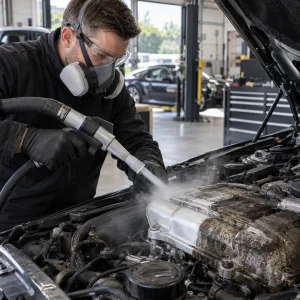
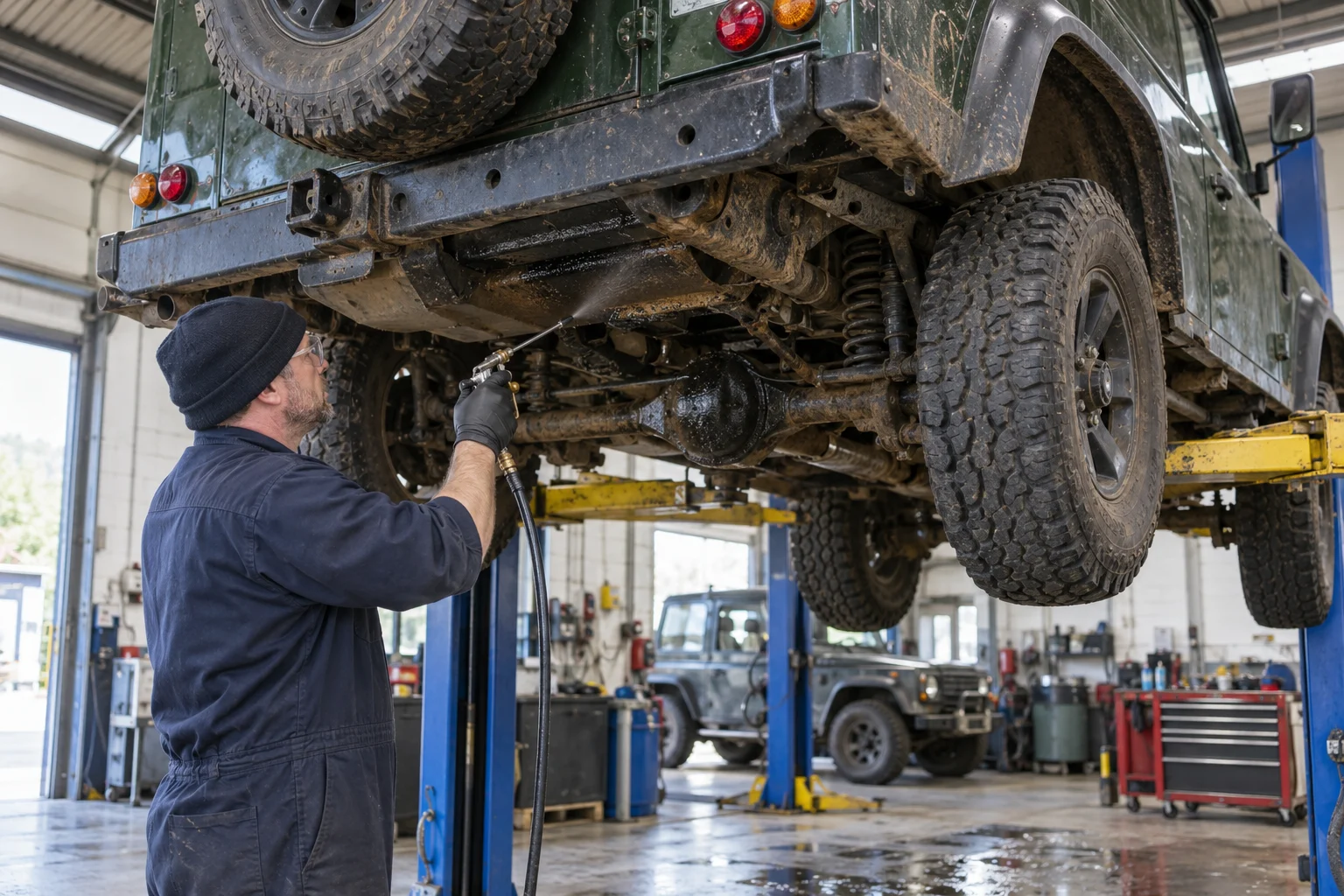
Every vehicle starts with a full inspection covering the underbody, suspension components, wheel arches, and chassis rails, checking for existing corrosion or wear that needs particular attention before any coating is applied. From there, we steam clean and dry ice blast the underside, removing built-up grime, old flaking underseal, and surface rust that would otherwise trap moisture beneath any new treatment.
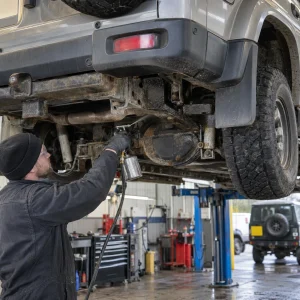
Once the vehicle is properly clean and dry, we apply Lanoguard. Unlike traditional bitumen-based underseals, which harden and eventually crack, letting moisture back in underneath, Lanoguard stays flexible and lanolin-based, continuing to move with the vehicle and seal out salt, water, and grime over the long term. It’s worked into every seam, joint, and cavity where moisture typically collects, and because it’s nearly transparent, future checks are straightforward rather than requiring the coating to be scraped back just to see the metal underneath.
The same team carries out every stage, from initial inspection through to final application, which matters particularly for high-mileage vehicles where getting the preparation right makes a real difference to how long the protection lasts. A vehicle that’s covered significant mileage often has more embedded grime and residual salt in hard-to-reach areas than a lower-mileage equivalent, and thorough preparation before Lanoguard is applied is what makes the difference between a treatment that holds up and one that starts failing early.
For a commuter vehicle covering serious annual mileage, this kind of ongoing protection matters more than it does for a car that mostly sits on the driveway. Book your vehicle in today. Get a free quote today, and we’ll confirm timing around your schedule.
Vehicles We Regularly Treat From Winsford
- Daily commuter cars covering significant annual mileage
- Family vehicles used for both commuting and the school run
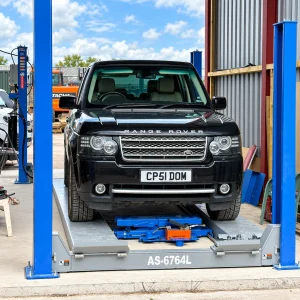
- 4x4s and estate cars handling longer motorway journeys
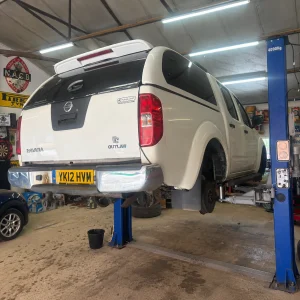
- Vans and light commercial vehicles used for local trade
- Motorhomes and campervans, thanks to our 4-post lift rated to 6,400kg and 5.2m wheelbase
If you’re bringing in a larger vehicle, our motorhome and commercial vehicle rust protection page has full details on our lift capacity before you book, including weight and wheelbase limits worth checking in advance.
Making It Worth the Trip
We know a short drive is still a drive, particularly for commuters already spending a lot of time on the road each week. That’s why we aim to make the visit itself as straightforward as possible, with clear timing given upfront and no surprises once the vehicle is on the lift. Most cars can be done within a day, which for many commuting customers means booking a day off or arranging alternative transport just once a year, rather than repeatedly.
We can also advise on the best time to book based on your usual commuting pattern, since some customers prefer to schedule around quieter periods at work, or combine the visit with annual leave already planned for other reasons. A quick conversation before booking usually sorts out the most convenient timing without adding extra hassle to an already busy commuting schedule.
Frequently Asked Questions
How long does a treatment take for a typical commuter car? Most cars can be completed within a day, covering inspection, cleaning, drying, and application. We’ll confirm exact timing when you book based on your vehicle’s condition.
Does higher mileage actually make a difference to how quickly rust develops? Yes, generally. More time on the road, particularly through winter, means more exposure to road salt and grime, which speeds up the conditions that lead to corrosion.
Is rust protection worth it if my car is relatively new? Yes, arguably it’s most cost-effective on newer vehicles, since applying Lanoguard before any corrosion has started gives the best long-term protection and the least preparation work is needed, particularly if you already know the vehicle will be covering a significant daily commute.
Can I book alongside a service or MOT? It’s worth checking timing with us directly, since a rust protection treatment takes a full day on the lift, but we’re happy to coordinate around other work where possible.
Do you offer anything for vans used for commuting or trade? Yes, we treat vans and light commercial vehicles alongside standard cars, and the same principles around mileage and exposure apply just as much, if not more, to vehicles used daily for work.
Is there a difference in treatment for a car doing motorway miles versus local trips? The Lanoguard application itself doesn’t change, but a higher-mileage motorway commuter is more likely to show additional grime and wear during inspection, which may mean slightly more preparation time before the coating is applied.
Whether you’re driving 20 miles a day or 200 miles a week, rust protection Winsford commuters trust starts with a proper inspection. Get a free quote today, and we’ll advise on exactly what your vehicle needs before any work begins.
See also: Rust Protection Cheshire: Areas We Cover | Motorhome Rust Protection & Commercial Vehicle Specialists | Lanoguard Treatment