Anyone who owns a motorhome knows the sinking feeling of spotting a small orange patch creeping along the chassis or wheel arch. Rust does not wait for a convenient moment to appear, and once it takes hold, it spreads quietly until the damage is far more serious than it first looked. That is why so many owners are now looking into proper motorhome rust protection rather than hoping their vehicle will simply hold up on its own.
Why motorhome rust protection matters more than you think
Motorhomes spend a lot of their life exposed to conditions that cars rarely face. They sit on driveways through the winter, they get driven on gritted roads, and they often carry a lot of weight over long distances. All of this puts pressure on the metal underneath the bodywork, particularly the chassis, wheel arches, and suspension parts.
Road salt is one of the biggest culprits. It clings to the underside of the vehicle, holds moisture against the metal, and speeds up corrosion far quicker than plain rainwater would. Add in stone chips from gravel roads, condensation from damp storage, and the sheer age of many motorhomes on the road, and it becomes clear why rust is such a common problem. A good motorhome rust protection routine is not about being overly cautious; it is about keeping a valuable vehicle safe from a problem that is genuinely very common.
How motorhome rust protection actually works
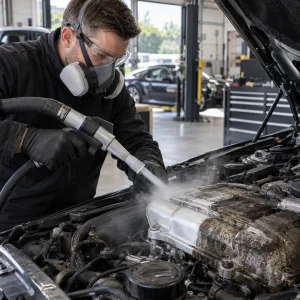
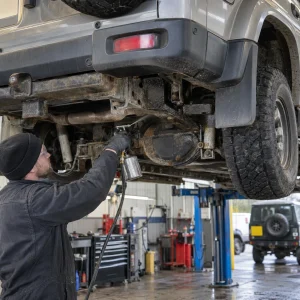
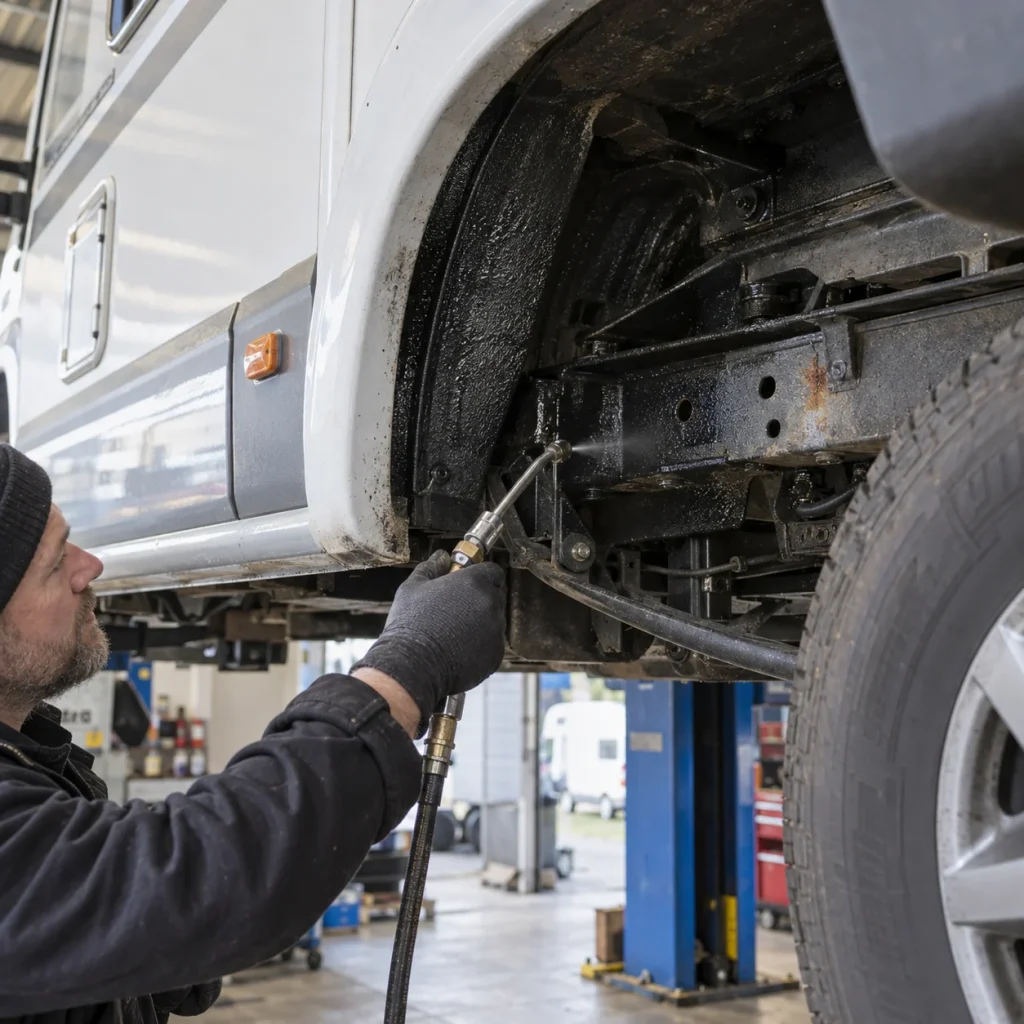
Proper protection is not just a case of spraying something underneath your vehicle and hoping for the best. It involves cleaning the underside thoroughly, checking for existing corrosion, and then applying a product that can get into every seam, joint, and cavity where moisture likes to gather.
This is where a treatment such as a lanolin-based rust treatment makes such a difference. Lanolin naturally repels water, so it forms a barrier that stops moisture from reaching bare metal in the first place. Unlike some older wax-based products, it stays flexible over time rather than cracking or flaking off, which means it keeps working season after season instead of needing constant reapplication.
We often get asked why the underbody gets so much attention compared to the visible bodywork. The answer is simple: it is the part of the vehicle you cannot see every day, so problems can build up unnoticed. Reading through why underbody protection is worth prioritising helps explain why this hidden area needs just as much care, if not more, than the paintwork you polish on a Sunday afternoon.
The role of the chassis and suspension
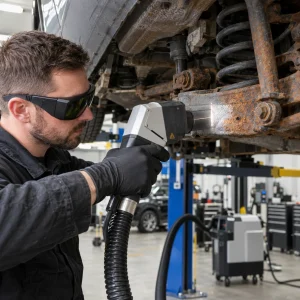
The chassis carries the entire weight of your motorhome, and the suspension keeps that weight moving smoothly over bumps and potholes. Both are made from metal components that flex and move constantly, which means any protective coating needs to cope with movement without cracking.
Corrosion around suspension mounts and brackets is a particular worry because it can affect handling and safety, not just appearance. Looking into how chassis protection guards suspension components against corrosion gives a clearer picture of why these parts deserve special attention during any treatment. A well-protected chassis also tends to hold its value better, which matters a great deal if you ever plan to sell or part exchange your motorhome.
Common causes of rust and road damage on motorhomes
Rust rarely appears out of nowhere. It usually builds up gradually because of a few repeated conditions:
Road salt during winter months settles into every crevice underneath the vehicle. Stone chips from loose gravel or worn road surfaces damage protective coatings and expose bare metal. Damp storage conditions, especially if a motorhome is left standing for long periods, allow moisture to sit against metal surfaces. Older seals and joints naturally wear down over time, letting water creep into places it should not reach.
Each of these factors on its own might seem minor, but combined over several years they can cause real structural problems. This is why so many owners choose to have their vehicle treated before rust has a chance to start, rather than waiting until a problem is already visible.
What makes a lanolin-based treatment different
Traditional underseal products have been used for decades, but they can become brittle in cold weather and tend to crack where the chassis flexes. A lanolin-based approach behaves differently because it stays soft and slightly oily, so it moves with the metal rather than fighting against it.
It also creeps into tiny gaps that a thicker underseal simply cannot reach, which means it protects seams and box sections that would otherwise be left vulnerable. For owners who want a proper understanding of how this type of coating compares with older methods, a detailed look at lanolin-based vehicle rust protection sets out the differences clearly, including how long the coating lasts and what sort of driving conditions it holds up best against.
Getting motorhome rust protection done properly
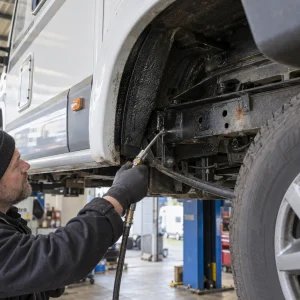
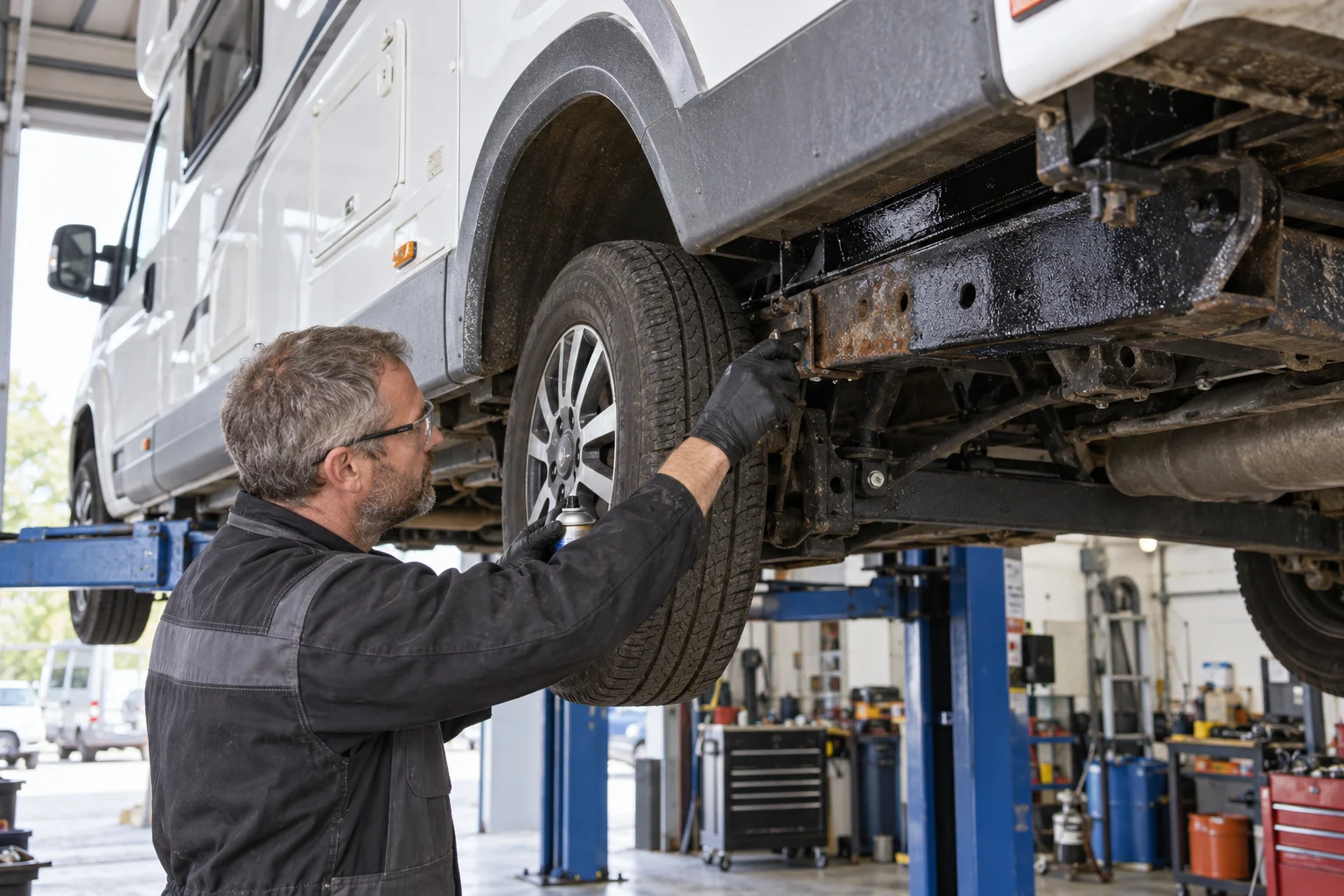
A lot of owners try to tackle rust prevention themselves with a can of underseal from a local shop. While this can help in a small way, it rarely reaches the tricky areas where rust actually starts, such as box sections, chassis rails, and hidden joints behind the wheel arches. Professional treatment usually involves a proper inspection first, so any early signs of corrosion can be dealt with before the protective coating goes on.
We always recommend having the work done somewhere with real experience of motorhomes specifically, rather than a general vehicle garage that mostly deals with cars. Motorhomes have different chassis layouts, extra weight to consider, and often larger cavities that need thorough coverage. If you are based in the North West and want to see how this looks in practice, rust protection services available in Cheshire give a good example of what a proper treatment day involves, from the initial wash down to the final application.
At Guardian Shield, we believe prevention is always more cost-effective than repair. Once rust has taken hold, repairing a chassis or replacing damaged panels can run into thousands of pounds. A protective treatment, by comparison, is a small cost that can add years to the working life of your motorhome.
Simple maintenance steps between treatments
Even with a proper coating applied, there are a few habits that help keep rust away for longer. Rinsing the underside of your motorhome after winter trips removes built-up salt before it has a chance to sit and do damage. Checking wheel arches and seams for stone chips after long journeys means small areas of bare metal can be touched up quickly. Storing your motorhome somewhere dry, or at least with good airflow, reduces the condensation that often causes hidden corrosion. Keeping an eye on drainage points and seals stops water pooling in places it should be draining away from.
None of these steps takes much time, but together they make a real difference to how long a protective treatment lasts and how well your motorhome holds up over the years.
FAQs
How often does a motorhome need rust protection treatment?
Most motorhomes benefit from a fresh application every couple of years, though this can vary depending on how often the vehicle is used and the conditions it faces. Regular winter driving on gritted roads tends to shorten this interval slightly, while motorhomes kept mostly in storage may need attention less frequently.
Can rust protection be applied to an older motorhome that already has some corrosion?
Yes, in most cases. Existing rust is usually treated first, either by removing loose flakes or applying a converter, before the protective coating goes on. This stops the corrosion from spreading further while giving the rest of the vehicle a proper barrier against future damage.
Is lanolin-based protection safe for seals, rubber, and plastic parts underneath the vehicle?
Lanolin-based products are generally gentle on rubber seals and plastic trims, which is one of the reasons they have become so popular. They do not dry out or crack these materials the way some harsher chemical coatings can over time.
Does rust protection affect the resale value of a motorhome?
It can make a noticeable difference. Buyers and dealers often check the underside of a motorhome closely, and a chassis free from heavy corrosion tends to reassure them that the vehicle has been looked after properly, which can support a stronger asking price.
Keeping a motorhome free from rust is not about doing one big job and forgetting about it. It is about understanding where the damage starts, choosing a treatment that actually reaches the vulnerable areas, and keeping up small habits that stop moisture and salt from settling in. With the right approach, your motorhome can stay structurally sound for many years of travel rather than facing costly repairs down the line.
If you are ready to give your vehicle the protection it deserves, get in touch with Guardian Shield and let us talk you through the treatment options that suit your motorhome best.