Motorhome rust protection needs a different approach to an ordinary car. Motorhomes, campervans, and commercial vehicles take a harder beating from rust than a standard vehicle. Longer trips, more time parked up exposed to the weather, and a chassis built from multiple sections and seams all give corrosion more places to take hold. Yet finding a workshop actually equipped to lift and treat a vehicle this size properly is surprisingly difficult in the North West. That’s where Guardian Shield comes in.
Why Larger Vehicles Rust Differently
A motorhome or campervan isn’t just a bigger car underneath. The chassis is often built up from a base vehicle with an additional sub-frame bolted or welded on to carry the habitation box, which means more seams, more brackets, and more places for road salt and moisture to get trapped out of sight. Add in long periods sat on a driveway or in storage between trips, sometimes for months over winter, and you’ve got the ideal conditions for corrosion to set in quietly before anyone notices.
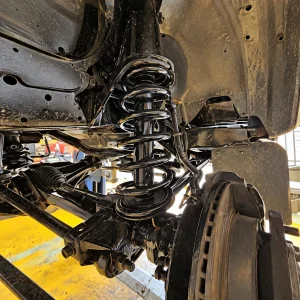
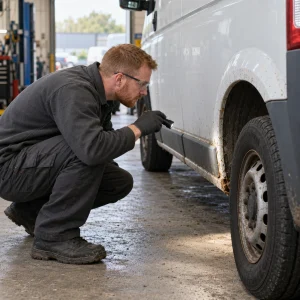
Commercial vehicles face a different but related problem. Vans, pickups, and light trucks used for trade or agricultural work are often loaded heavily, driven daily in all weather, and rarely get the same care as a private car. Suspension components, chassis rails, and wheel arches on a working vehicle see constant exposure to grit, salt, and moisture, and repairs on a commercial vehicle mean lost working days, which makes prevention considerably cheaper than the alternative.
Motorhome Rust Protection Built for Larger Vehicles
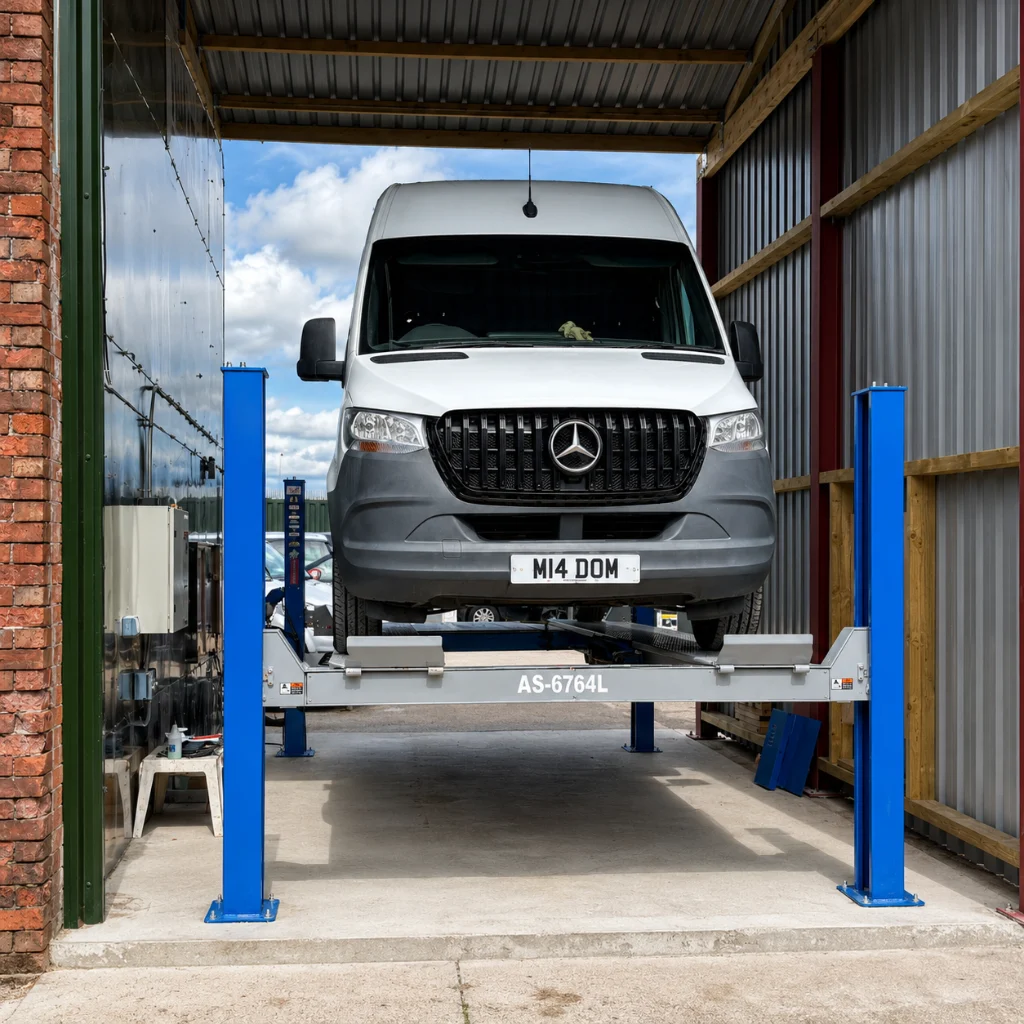
Most rust protection services in the North West are set up with cars and standard 4x4s in mind. A driveway visit or a car-rated ramp simply can’t give a motorhome, campervan, or long-wheelbase van the access it needs for proper motorhome underbody protection. Getting it right means lifting the whole vehicle clear of the ground, taking the wheels off, and reaching every seam, arch, and chassis rail without rushing the job.
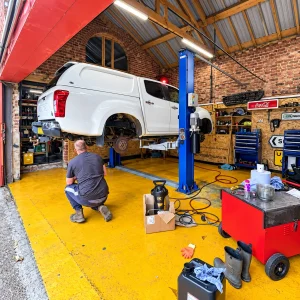
Our workshop is built around this exact requirement. We run a 4-post lift rated to 6,400kg with a maximum wheelbase of 5.2 metres, which covers the large majority of motorhomes, campervans, and commercial vehicles on the road today, including most panel van conversions and mid-size coachbuilt motorhomes. If you’re unsure whether your vehicle fits within those limits, get in touch, and we’ll confirm before you book, rather than risk a wasted trip.
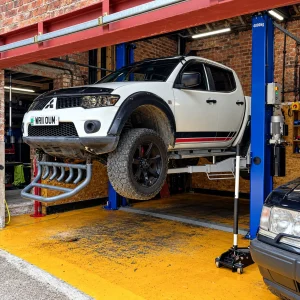
Alongside the 4-post lift, we also run a 2-post lift rated to 4,000kg for cars, 4x4s, and lighter vans. Having both lifts running side by side means we can work on two vehicles at once, so a motorhome and a car, or two commercial vehicles from the same fleet, can go through the workshop on the same day without one holding up the other. For fleet operators in particular, that throughput matters when vehicles need to stay off the road for as little time as possible.
Rust Removal and Chassis Protection for Motorhomes, in One Visit
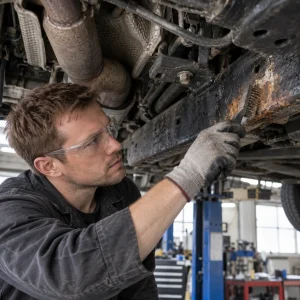
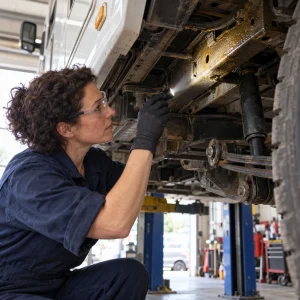
Treating a vehicle properly starts long before any protective coating goes on. We begin with a full inspection to establish the current condition of the underbody, chassis, and any areas showing early signs of corrosion. From there, we steam clean and dry ice blast the underbody, stripping away years of built-up grime, old flaking underseal, and surface rust that would otherwise sit trapped beneath a new coating and keep corroding out of sight where you can’t see it.
Only once the surface is properly clean and dry do we apply Lanoguard. Unlike traditional bitumen-based underseals, which harden and crack over time and can trap moisture underneath once they do, Lanoguard stays flexible and lanolin-based, so it continues to move with the vehicle and keeps sealing out water, salt, and road grime rather than becoming a brittle shell. We work it into every seam, joint, and cavity where moisture likes to collect, including areas that are easy to miss on a vehicle this size, such as chassis outriggers, suspension mounting points, and the underside of the habitation box on motorhomes and campervans.
Doing the prep and the protection under one roof, in a single visit, means you’re not booking a cleaning service one week and a coating service the next and hoping the two line up. It also means the person applying the final coating has seen the vehicle at every stage, rather than working from someone else’s preparation.
Vehicles Covered by Our Commercial Vehicle Rust Protection Service
Our motorhome, campervan, and commercial vehicle service is suited to a wide range of vehicles, and motorhome rust protection remains our core specialism:
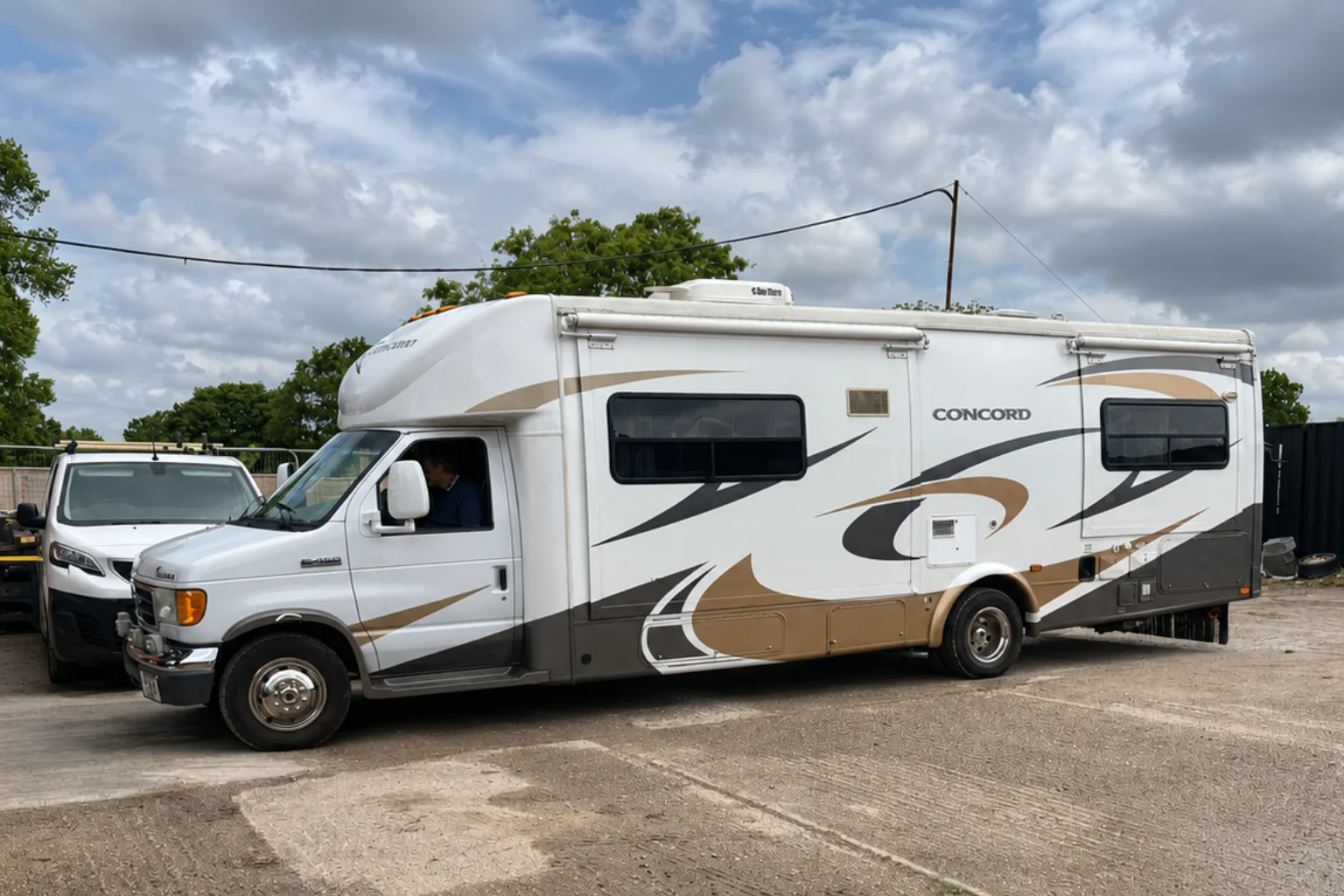
- Coachbuilt and panel van conversion motorhomes
- Campervans, including older and self-converted vehicles
- Horseboxes and trailers within our weight and wheelbase limits
- Vans and pickups used for trade, agricultural, or fleet work
- Static caravans and mobile homes where underbody access allows
If your vehicle falls outside the 6,400kg or 5.2 metre wheelbase limits, it’s still worth getting in touch. We can often advise on alternatives or let you know if a particular configuration will still work on our lift.
Worth the Journey
Because so few workshops in the North West have the lift capacity for a vehicle this size, we regularly see motorhome, campervan, and commercial vehicle owners travel well beyond Cheshire for van rust proofing and motorhome underbody protection done properly, some from up to 90 minutes away. If you’ve been searching for a specialist who can actually take your vehicle’s weight and length rather than turning you away at the door, you’ve likely already found there isn’t much choice closer to home.
This is particularly true for motorhome and campervan owners, where the vehicle often represents a significant investment and a home away from home rather than simply a means of getting from A to B. Protecting it properly is about protecting that investment for years of use, not just passing an inspection.
Prevention Costs Less Than Repair
Structural rust repair on a motorhome or commercial vehicle chassis is rarely straightforward or cheap. Once corrosion has taken hold in a chassis rail, outrigger, or sub-frame joint, the fix usually means cutting out and replacing sections of metal, which is labour-intensive and can take a vehicle off the road for weeks rather than days. For a motorhome used for family holidays or a van that a business depends on daily, that downtime is often more costly than the repair itself.
A single Lanoguard treatment, reapplied annually as a top-up, is a fraction of that cost and keeps the vehicle usable throughout. For commercial fleet operators, treating vehicles on a rolling schedule also makes budgeting predictable, rather than facing an unplanned repair bill when a vehicle fails an inspection or a driver reports a problem.
Motorhome and Commercial Vehicle Rust Protection Across Cheshire and the North West
Guardian Shield is based in Nantwich, Cheshire, and serves motorhome, campervan, and commercial vehicle owners across Nantwich, Crewe, Sandbach, Middlewich, Winsford, Congleton, and Whitchurch, as well as further afield across Chester, Wrexham, Warrington, and towns within roughly 90 minutes of our workshop. Given how few workshops in the region have the lift capacity for vehicles of this size, owners regularly travel from beyond their immediate local area, particularly those with motorhomes, campervans, or fleet vehicles who’ve struggled to find anywhere closer equipped to take them.
If you’re outside our usual coverage area but your vehicle fits our weight and wheelbase specifications, it’s still worth getting in touch. We’d rather confirm suitability over the phone than have you make a wasted journey. Whatever your vehicle and wherever you’re travelling from, motorhome rust protection done properly starts with a conversation, not a guess.
Frequently Asked Questions
How long does the treatment take? Most motorhomes and larger commercial vehicles need a full day in the workshop to allow for inspection, cleaning, drying, and application. We’ll confirm timing when you book based on your vehicle’s condition.
Will Lanoguard work on an older motorhome with existing rust? In most cases, yes. Chassis protection with Lanoguard can be applied over light surface rust once the loose material has been removed during preparation, though heavily corroded areas may need additional attention first, which we’ll flag during inspection. This applies equally to campervan rust protection on older self-converted vehicles.
Do you treat static caravans and mobile homes? Where underbody access allows, and the vehicle or unit falls within our lift specifications, yes. Get in touch to discuss your specific setup.
What if my motorhome is longer than 5.2 metres wheelbase? Contact us with your vehicle’s details, and we’ll let you know whether it can still be accommodated or advise on next steps.
How often does Lanoguard need reapplying? An annual top-up is generally recommended to maintain full protection, particularly for vehicles that spend a lot of time on salted winter roads or are stored outdoors between trips. We can advise on a suitable schedule for your specific vehicle and how it’s used.
Get in touch today, and we’ll confirm your vehicle fits our lift specifications before you book in. Get a free quote today.
See also: Rust Protection Cheshire: Areas We Cover | Lanoguard Treatment | Ice Blasting Treatment